Satanism and the Egocentric Predicament
by Thomas LeRoy, Founder of the Sect of the Horned God
“Everything is consciousness.”
Above is an example of one of those trippy-dippy-hippie bullshit New Age sayings that has been voiced by more than a few gluten-free, organic granola-eating types with a meaning lost to them, but since it was muttered by Deepak Chopra it must be deep. In truth, it has the depth of a drought-ridden California mud-puddle.
But what would happen if we rearranged those words? What if we wrote: “Consciousness is everything”? Does that have meaning?
The fact is, there is no truer statement. Consciousness is everything. All we know, all we see, feel, smell, etc. we do so with our minds. Our hands feel nothing, our eyes see nothing, our nose smells nothing, our ears hear nothing; it is all in the mind. And what is the mind? It’s that occupant of the brain. It is one with our consciousness.
But what is this thing called consciousness? Not an easy concept to define, but it has been described as the state of being awake and aware of what is happening around us, and of having a sense of “self”. We can never go so far as in creating a science of consciousness, for science is purely objective and consciousness is subjective. But it is said that consciousness can be quantified to a degree. It is believed that in the brain there are three different levels of consciousness. Level one is found in the back of the brain, also known as the reptilian, where we find the awareness of the space around us. Level two is found in the center. This is the mammalian brain, where awareness pertaining to relationships with others is found. Last, and located in the frontal lobe, is level three, the human, the part that allows us awareness of time, the future, tomorrow. But what about awareness of reality? Can we fully comprehend that? Maybe one day our brains will develop a fourth level of consciousness in a frontal-frontal lobe, but until that day the answer is no. We can not be sure if anything is real. It’s all perception. BUT, there is one thing we can be absolutely sure of — our own personal existence.
“Cogito ergo sum. I think, therefore I am.” The 17th century French philosopher René Descartes uttered those words with the idea that the mere act of thinking about one’s existence proves there is someone doing the thinking. We can know we exist, but we can never be sure as to the true extent, or location, of that existence. For all I know I am right now sitting in a rubber-padded room, straight-jacket on, in a puddle of my own piss imagining I founded a Satanic organization and that I live with a beautiful wife on a lovely winery in Northern California. Or I could be a head in a jar with electrodes hooked up to my brain feeding me a simulated reality like out of “The Matrix”. Or I’m simply pure consciousness trapped in a material reality created by the “Demiurge”. Who knows? The truth is we can not know for certain. But don’t get me wrong. If the objective reality is a simulation, or an illusion, one can’t help but notice that there are some pretty strict laws in this illusion that seem unbreakable. It wouldn’t be wise for one to jump off the roof of a skyscraper and attempt to manifest a staircase out of pure consciousness. Could end poorly.
So where does this lead us? Well, if we wholeheartedly and unabashedly want to seek the truth we have only one direction to go. Most look outward for answers; we go searching in an uncertain reality seeking 100% assurance when we should be looking inward!
Before the advent of psychology, one of the best tools to aid in our psychonautical studies was mythology. But most today ignore this tool, or attempt to make the gods and monsters of mythology “real” by using a little trick called faith. Some may get a true sense of fulfillment from faith, but they have missed the point. If myth is the song of the psyche that gives voice and substance to the archetypes of the collective unconscious, then faith is unnecessary. Once the journalist Bill Moyers said to mythologist Joseph Campbell, “You’re a man of faith.” Campbell’s response was, “No, I’m not. I don’t need faith when I have experience.” If you use the word “Satanists” in defining who you are, you too are delving into that experience of the mythological. You have found that psychological tool. You grasp it in your greedy little hand, for Satan is more than a word, but less than an absolute. Myth should be experienced, not believed. It is a way for us to better understand that which we know without a doubt is real — our consciousness.
The Collective Unconscious and the Left-Hand Path

By Thomas LeRoy, Founder of The Sect of the Horned God
The four pillars of the left-hand path educational foundation called The Sect of the Horned God are philosophy, psychology, mythology and the occult. These four sciences are represented by four men: Friedrich Nietzsche, Carl Gustav Jung, Joseph Campbell and Anton LaVey. And the most important of these disciplines (for it leads to a greater understanding of the other three) is the science of the mind — psychology. Jung, and his theory of the collective unconscious, has been an indispensable tool in our understanding of not only mythological archetypes, but also the occult.
During an individual’s lifetime the make up of the personal unconscious is manifested, but the contents of the collective unconscious invariably consist of archetypes that were present from the beginning. Archetypes are at the foundation of the collective unconscious. They represent basic human behaviors and situations. Thus, the mother-child relationship is governed by “The Mother” archetype, the truth-seeker in “The Sage”, the desire for power and control is represented in “The Ruler” and so on. Also, and in reference to the occult, mystic experiences are also governed by archetypes, not by entities from without. But the archetypes that are clearly characterized from an empirical point of view are those which have the most frequent and disturbing influence on the conscious self, or the “ego”. And the most accessible of these, and the easiest to experience, is the “Shadow”, for its very nature comes from, in greater part, the personal unconscious.
For a better understanding of the collective unconscious and the archetypes therein, picture a vast ocean, limitless, with small boats adrift upon that ocean. These boats represent our egos, or conscious selves. We are in control of our vessels to a certain extent, but in truth, we are at the mercy of the elements, namely the sea (the unconscious/collective unconscious). Swimming beneath its surface is an array of creatures that have an impact, large or small, upon our vessels. They could, with ease, swim from one to the other, either to the benefit, or degradation, of the individual ego. Those upon the left-hand path must endeavor to utilize these predators of the deep to the exaltation of the ego, rather than the degradation. They should, to a certain extent, be assimilated into the conscious personality to break away from the maelstrom that our boats (or egos) are at the misery of. But beware. If one attempts to draw these deeper creatures of the collective unconscious to the surface, they will invariably die, for they were never meant to be a part of objective reality. They are metaphor, symbols, whereby a literal interpretation will result in their demise; for a metaphorical truth is not an objective truth.
The shadow, though, that which is fed by the personal unconscious, can be brought to the surface through symbolic means. One way is by artistic representation, thus the ego is able to integrate rather than repress unpleasant unconscious impulses. Examples of positive shadow integration would be artists who deal with dramatic or foreboding themes, such as the paintings of the late H.R. Giger, or the writings of H.P. Lovecraft. But when repressed, the shadow may still find a way upon our boats, slithering on board and manifesting itself in unpleasant fashions.
We on the left-hand path have come to terms with our shadow. We do not shy away from the darker aspects of music, art, or philosophy. We are compelled by symbols such as Baphomet and the inverted pentagram, that most popular of LHP symbols. The inverted pentagram points downward to the depths of the vast ocean that is our shared unconscious, not toward the heavens. It invites us to look into the sea’s murky depths to seek out personal truths to aid us on our path.
The Armchair Philosopher
July 27, 2015
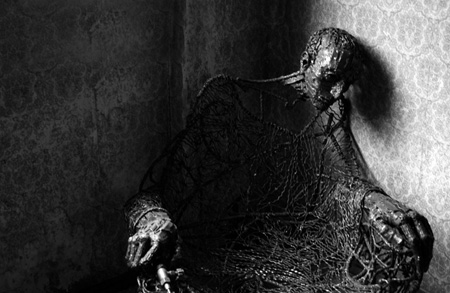
“The armchair philosopher; the bane of a life less lived. And as they rise to meet the world, they are unaware their shadow in the chair remains.”
The Armchair Philosopher; such a curious species in their ever continuing attempt to create an obligation around the whims of babbling fancy and stilted airs of intellectual importance. Convolution and contradiction mixed with common quotes make for a murky soup of feigned scholarly pursuit, yet still they ride on the sails of intentional confusion.
They’re not hard to spot, of course, with their shiny suits and brand new shoes nearly 10 years old and the more they talk the more they reveal the nonsensical nature of their thoughts and words. I’ll listen for a time to the droning deliberations, fascinated by the many indiscretions that counter the claims of above average intelligence. More often than not, however, a breath of impatience will usually meet my questions to them of “How and Why”.
Time is of importance, though, and one to be shared wisely and cautiously. Standing to take leave I look down at my boots and smile. They seem more muddy and worn amid the glare and cage-like austerity that such a persons mind holds.
What is more wise then, but to open the door and head back into the storm?
The Promise
A work of fiction by Thomas LeRoy
The boy gazed out the arched window and listened as the call to prayer echoed off the walls and minarets in the haze of a fiery sunset. He hated the Muslims, but he found that haunting song strangely beautiful.
“Why aren’t you going to prayer, Yusef?” said the boy as he lay on his stomach, a servant dressing the lash marks on his back.
Yusef the man-servant shrugged. “I think Allah will forgive me this just once. Besides, your wounds need care, young master.”
The boy flinched as Yusef gently applied a healing ointment.
“My brother may not mind getting buggered by the sultan, but I will never willingly offer myself to his urges,” said the boy.
Yusef sighed. “And you will continue to be lashed.” The servant set the ointment jar on a table. “There, I am done. I think you will live.”
The boy pushed himself up into a sitting position as Yusef handed him a fresh tunic. “I am a prince,” the boy said as he dressed. “A prince does not succumb to the whims of a twisted old man.”
“But your brother has,” said Yusef. “And he is a prince.”
“Radu is no prince. More like a princess.”
Yusef chuckled.
The boy stared at him.
“Forgive me, young master,” said the servant as he placed his hand over his heart and gave a slight bow. “Oh, I almost forgot. I bought something for you today at the bazaar.” Yusef went to a leather bag hanging from a peg on the wall, reached in, and pulled out an item. “Here, I thought you might find it entertaining. It’s a puzzle-box.”
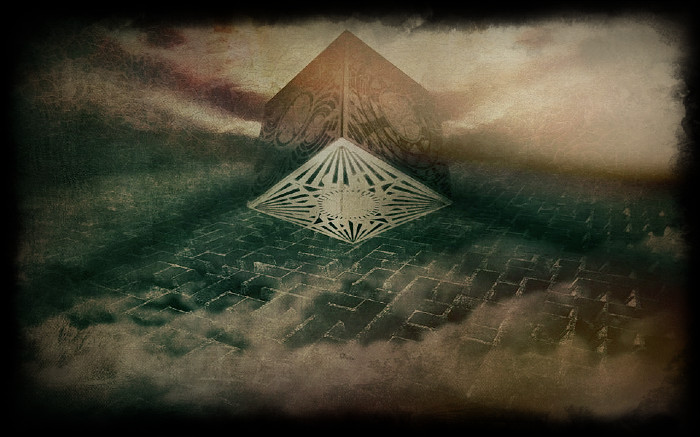
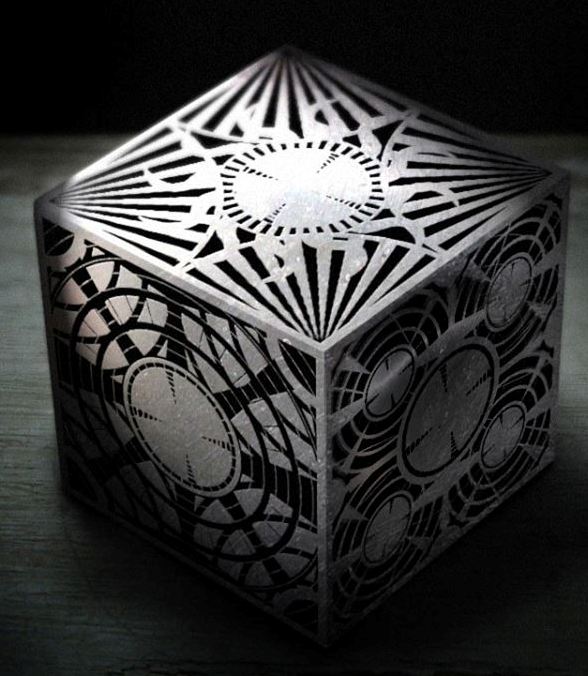
The boy took the box and studied it. It was metallic, with strange etchings upon it’s surface. This was an early example of a puzzle-box that would be perfected three centuries later by Philip Lemarchand, a French maker of mechanical birds. LeMarchand would construct more than 270 of his puzzle-boxes before vanishing off the face of the earth.
“How does it work?” said the boy.
Yusef shrugged. “I know not.”
The boy set the puzzle-box on his cot. “I will rest now,” he said. “Find your leave.”
Yusef bowed again. “Very good, young master.”
The boy was restless as he lay on his stomach, pillows propped up under his chin. He knew someday he would leave this heathen hell-hole and return home to his father. But until then, he had to survive.
He sat up, and lit an oil-lamp hanging beside the bed. He looked about for the puzzle-box among the blankets. Finding it, he again examined its craftsmanship. It was a thing of beauty. He scratched his head, then went to work on trying to figure out its “puzzle”.
The concept of time became lost to the boy as he spent hours obsessing over the box. Then, out of pure luck he heard a “click” and the top third of the puzzle-box began to automatically rotate counter-clockwise. And as it did, a tinkling of bells could be heard. When it stopped, the bottom third began to rotate clockwise. And what was originally light bells, now began to sound like the church bells of the boy’s homeland. But the sound did not come from the box, but from somewhere else, far away, yet very near.
“Who could have made such a thing?” whispered the boy.
Now, if he had gone to the bazaar and inquired as to the origins of the strange little device, he would have learned that it had been created by a heterodox sect of Muslims back in the 9th century. This small band of heretics revered the book called the Al Azif, written in the 8th century by the “Mad Arab” Abdul Alhazred. During that age the Azif gained considerable, though surreptitious, circulation among the practitioners of the arcane arts. Then, in 950, it was translated into Greek by Theodorus Philetas and given the title The Necronomicon.
He set the puzzle-box on the table and watched. The top of the box slowly opened, and the walls of his chamber began to grow faint, dissolving, and the flame from the oil lamp flared. But the boy paid little heed to these things. His eyes were fixed on the box.
The sound of bells tolled one last time, the oil lamp went out, and the chamber was cloaked in a blackness darker than that he could ever imagine. The darkness was stifling and he could feel a pressure, as though he were at the bottom of a deep lake.
There was a strange scent in the air, like sweet spices and a soft azure glow began to compete with the blackness. Then he heard heavy breathing.
He turned, and where the wall beside his bed should have been, was now an open void, and standing before him was a creature the likes of which his young eyes had never beheld. The boy jumped to his feet.
“I have come,” said the creature. Its thick black lips smiled.
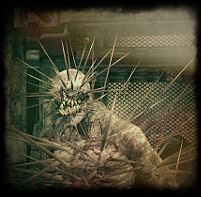
The being before him was a man, or may have been at one time. How it could be speaking, or even breathing, was beyond the boy’s imagination. It had iron stakes, many, shoved through its leather-clad body, some going from the right hip up through the left shoulder, others through the rib-cage, the back, shoulders and even out the top of its bald, blue/white head.
“Do you know what you have done, boy?” said the being in a soft voice, speaking a language that was neither Turkish, nor his native Romanian, yet the boy somehow understood it. “You have called upon me, and I have come. Now we shall leave.”
“Where?” muttered the boy.
“Where? Where?” The creature laughed. “We go to a land of green fields, and open meadows with flowers as far as the eye can see!” The sound of its laughter boomed. It consumed the boy. He covered his ears.
“Be gone!” the boy yelled.
“I shall, but not without you.”
“I will not go with you!” the boy said, his voice cracking, is heart racing.
“Ah, but you must. It is how it is done.”
“What can I do to prevent my leaving?”
The being stared at the boy with eyes like two orbs of polished ebony. “Nothing,” it finally said.
“There must be something!”
“Souls,” said the being. “But you are in no position to grant my request.”
“Souls?” said the boy.
“Yes,” said the being. “Sacrifices to me.”
“I will do that,” said the boy.
The being laughed. “How? You are but a child.”
“But I am a prince. I have power.”
The being grinned. “The lashes on your back say otherwise.”
“But I will have power someday! And then you will have your souls!”
The being was silent for many long moments. “Very well.” It finally said. “I would like to see what you can do, for I detect a blackness at the core of your being.”
“I will do it,” said the boy.
“You have but twenty years, which is naught but a moment to me. If it is not done within that time period, then I shall return for you. And we shall get to know one another very well!”
- Sultan Mehmed II had raised a great army with the objective to conquer Wallachia, a principality in Romania, and annex it to his empire. He found justification for this because the Wallachian prince had refused to pay his taxes to the Ottoman Emipre.
Mehmed, with a force of 60,000 troops and 30,000 irregulars, headed toward war with Wallachia. But as he got within view of the capital city of Târgoviște, he noticed the sky was heavy with birds. Then he was greeted by the sight of a veritable forest of stakes on which the Wallachian prince had impaled 20,000 Turkish prisoners, the bodies rotting under the summer sun.
Horrified, the Sultan and his troops retreated.
Vlad Dracula had kept his promise.
The Source of Myths and Symbols
(While not a editorial or essay, this piece was published on the http://welshmythology.com/ website, and offers an excellent informative and historical view of myths and symbols. ~Babylon)
All myths and symbols arise initially in peoples imaginations, and if they are artists they will express them in creative terms more or less understandable to those around them. All of human imaginative life is inherently influenced by the unconscious, that aspect of the psyche that’s outside of our awareness, containing such things as instincts and automatic responses. Many psychologists believe the imagination acts as a medium between the conscious and unconscious mind, and as a result the art we create often gives us glimpses of our deeper, instinctive selves. Our creative urges move in response to these unseen currents of our own psychology.

As a theory* the unconscious was developed by the early psychologists of the 19th and 20th centuries, a group largely identified with Sigmund Freud and Carl Jung, although in truth there were many other theorists involved. Carl Jung went on to describe how the unconscious also contained a deep reservoir of accumulated ancestral forms that he called the collective unconscious. In describing the collective unconscious, Jung said:
. . . we might think of it as a collective human being combining the characteristics of both sexes, transcending youth and age, birth and death, and from having at its command a human experience of one or two million years, practically immortal. If such a being existed, it would be exalted above all temporal change; the present would mean neither more nor less to it than any year in the hundredth millennium before Christ; it would be a dreamer of age-old dreams and, owing to its immeasurable experience, an incomparable prognosticator. It would have lived countless times over again the life of the individual, the family, the tribe, and the nation, and it would possess a living sense of the rhythm of growth, flowering, and decay.
(Carl Jung, Collected Works vol. VIII, par. 673)
Through their research, Freud, Jung and many others came to perceive that the unconscious could be understood in mythological terms. One way in which the unconscious expresses itself is through primordial human figures and story-like narratives that gravitate around fundamental human experiences such as love, power, cunning, birth, death and self-knowledge. Jung called these deep, unconscious patterns archetypes, and identified some of them, such as the mother, the trickster and the wise old man. Just as Jung describes the collective unconscious in terms of the totality of human experience, archetypes can be described as those continually arising themes in that collective experience.

For scholars such as Carl Jung and Joseph Campbell, the cohesion of human global culture, the consistency with which the same archetypal patterns emerge in different regional cultures testifies to the existence of such a collective unconscious. For example, the tidal movements of the mass media, the memes and trends, fashions and fads can all be interpreted as following the pull of archetypal figures and narratives. To this day, just like countless ancestors before us, we are fascinated by heroes and villains, the trickery and intrigue of politics and power, the magic of science, religion and art, the otherness and familiarity of nature. These mythological figures and narratives can all be traced back to our shared, collective unconscious. In this way its one of the sources of culture and language, the basic stuff of meaning.
Mythic art.
Artists who have a particular sensitivity to the shared, collective unconscious will often create art that has a significant resonance within their own cultures. The fashion world exemplifies this process better than most aspects of modern culture, with designers reinterpreting old styles and garments within new contexts, finding what is most relevant to the most people. It could be argued that all art and culture has evolved along similar lines to biological evolution, with the most successful expressions of collective myth being the most enduring and at the same time the most adaptable. Those myths and symbols that manage to retain their influence as they change contexts will surely last longer than those that do not. As reflected in modern consumerism, there is great value in being able to create and express symbols endorsed by popular opinion for successive turns of the cultural wheel. This is exemplified by the modern practice of branding that strives to perpetuate the popularity of a single iconic image for an extended period of time. These modern symbols, although not explicitly set in a mythological context, inevitably draw on the universal mythic substratum of culture. Even though they have replaced older mythic symbols, they still exert a similar kind of power and influence.

The gods.
Its not difficult to find in the concept of an archetype a rational explanation for gods and their powers. Many scholars have explored the idea that myths, even those expressed in a medieval form such as the Four Branches, were originally tales about gods. But it must be born in mind that the modern conception of gods and supernatural agency, particularly in the atheistic cultures of the West, may very well be far removed from how these things were experienced by people in the past. The well established practice of rationalism in modern academia necessarily separates gods and divine powers out from the individual so as to reveal them as cultural fabrications; once they have been separated out as such they naturally dissolve to the touch, converted into nothing more than words and ideas. But to experience such things as core elements of one’s self, as people in the past surely did, means these gods could not be separated out from the individual in any meaningful way. We must therefore bare in mind that when we reduce ancient gods and their powers to rational concepts such as the collective unconscious and its archetypes, we don’t automatically discount the power of belief in the creation of culture, for that would skew our own understanding of the historic past regardless of our own position on such things.
What symbols say.
But what exactly is a symbol in this sense? Its impossible to know what the unconscious actually contains; we can’t open up the brain and peer into it as we would a loft in a house. But we can guess at its nature by paying attention to how it influences the conscious mind. By watching the ripples on the surface we can make guesses at how the currents deep bellow are moving. By studying the symbolic images that rise up into conscious awareness, Jung believed that we could interpret the movements of the unconscious. This led him to perceive that one of the basic qualities of the unconscious is its continual attempt to redress psychological balance. He said:
The unconscious, [is] the neutral region of the psyche where everything that is divided and antagonistic in consciousness flows together into groupings and configurations. These, when raised to the light of consciousness, reveal a nature that exhibits the constituents of one side as much as the other; they nevertheless belong to neither but occupy an independent middle position.
(Carl Jung, Psychological Types, p.113)
Jung saw the unconscious as the place where the psyche attempts to regulate the different influences that flow into it. It brings conflicting elements together into what he called groupings and configurations that in turn are expressed in the conscious mind as symbols: images that contain a blending of the original influences. If this theory is correct, then when such symbols are expressed consciously, we should be able to see in them traces of those initially conflicting influences, but presented in a more or less stable state. I’ll explore this idea in the next post.
———————————————–
*It must also be stressed that the theory of the unconscious is by no means uncontroversial: many current researchers tend to remodel the notion of non-conscious processes according to recent developments in neurological science. But this new context of understanding doesn’t change the fact that regardless of their biological correlations and influences, non-conscious phenomena can still be interpreted on both individual and communal levels in terms of mythology.
Cor-relation and Causation

By Mistress Babylon Consort
I got my laugh for the day reading this one. Originally posted by the Skeptical Spectacles, this just had me shaking my head. Sadly there are those out there who would believe it. That it is a meme should make the intention and mockery obvious to most, but it doesn’t always. Thomas LeRoy made this same point in his video about Specious Reasoning when comparing the cor-relation between pillows and car crashes: 99% of people killed in car crashes slept on a pillow the night before. It must be true then, right?
While cor-relation does not imply causation, there are many causes that catch global attention like an out of control firestorm and with it, reason burns down also. To many insist on relying on pseudo-scientific information that use words like “thought to be”, “may be related to”, etc while ignoring unbiased scientific data and information from reputable journals. .
Whatever happened to being skeptical?
The Satanic Adversary
Zach Black: Alive and Well
Sect of the Horned God versus Haters
Machine Gun Etiquette
By Octavius
An open letter to the keyboard warriors of the LHP:
“Challenger” and “Adversary” does not mean “one-who-criticizes-everything-possible-in-hopes-of-drawing-affimation-or-accolades-from-other-on-line-Satanists.” You’re boring. You’re unappealing. You’re uncouth. Far be it from me to posit absolutes, but I will say that being adversarial or agnostic in your life does not require bitching about the perceived “satanic value” of various television programs, movies, books, or fellow internet denizens. It does not require you to dissect every post or video on multiple LHP forums in an attempt to bolster your Satanic internet credibility. Your opinion was likely not solicited, and your post only illustrates your need to socially display your pseudo-superior understanding of all things LHP in the most transparent and desperate way possible. These cyber-Satanists will often retort with ham-fisted excuses, my favorite being, “Why did you post this if you didn’t want it challenged?” What are you doing in your own life away from the computer screen to validate your assertions of superiority? Have you nothing better to do than surf the internet looking for “fresh prey?” Why is your Axis Mundi an unrelenting focus on YouTube or forums? What a sad existence. I can make this accusation because, at one time, I was one of these idiots.
So many find it necessary to belligerently give their alternate opinion or perception of a given topic in an attempt to present themselves as credibly Satanic. Varying degrees of hostility are not a benchmark of Satanism. Rather, I suggest that it’s the ability to politely carry on a conversation or contribute to a healthy debate that garners respect, if respect from others is what’s needed or desired. Belligerent criticism and posturing mean nothing. In any discussion, one must first have an intelligent and informed platform in which to present the issue or topic. Alas, these basic concepts of common courtesy are all too often assumed unnecessary within the cyber world of Satanism.
Then there are the schemers and trolls; those who spend most of their free time with eyes glued to their computers and post vague ideas under the guise of philosophy. They may also obfuscate overlong essays designed to repackage what has already been said by someone else in hopes of impressing the credulous or confusing the informed. They wait for someone unfortunate person to reply, then proceed to elevate themselves above the questions posed by bullying or denigrating the questioner. This is a common practice among many cyber-Satanists, some of whom are well known in many on-line communities. They are tolerated for a time, then banned, and move on to another forum or Facebook group to start again. These are parasites of the LHP, not Satanists.
My unsolicited advice to anyone still reading is simply this; honesty, courtesy and curiosity are still in style among those who know better. Your attitude will always define your behavior. Then again, this entire post is merely my opinion. How you interpret it is up to you. However, it’s my responsibility to present it with respect and candor, which I have genuinely tried to do here, and try to do with anything I do, say or write. Thanks for reading.
The Orders of The Sect of the Horned God